UAV design methodology: the full closed-loop workflow
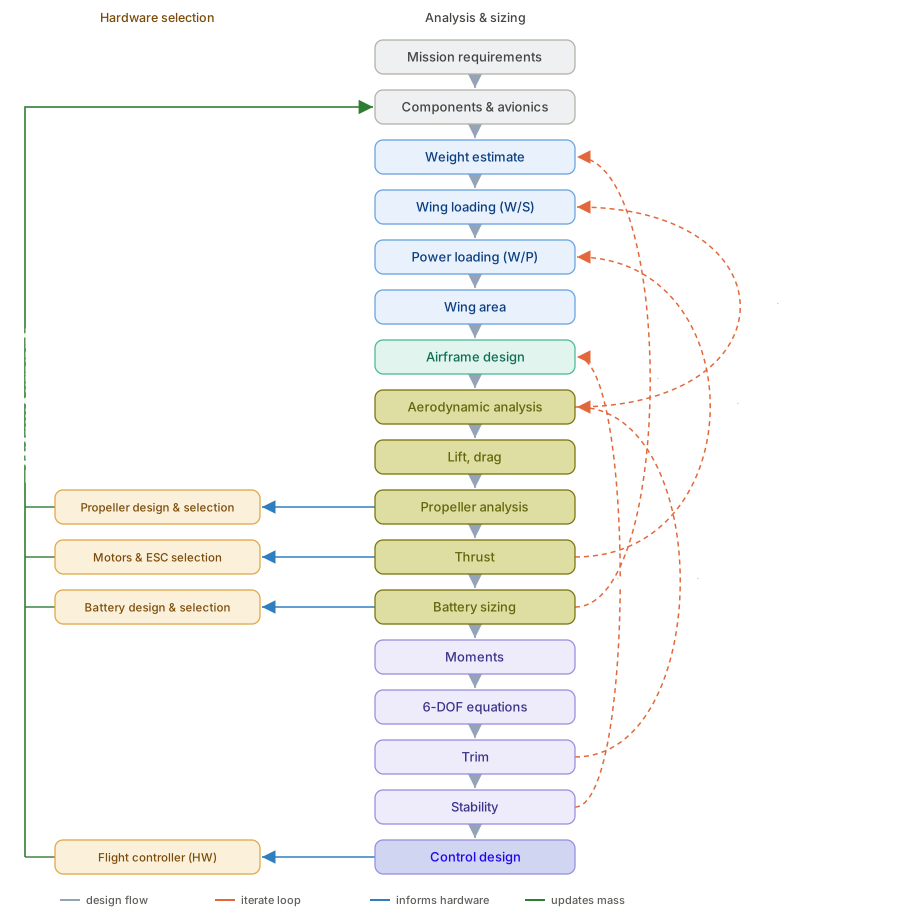
A drone or UAV isn't designed step by step and left alone — it's an iterative, closed loop. Requirements set the targets; sizing, aerodynamics, propulsion and dynamics each feed the next; and the results loop back to update weight, geometry and hardware until the design converges. This is the process behind every analysis in the design calculator.
How it flows
- Requirements — mission requirements and the components & avionics (flight controller, sensors, payload) set the baseline.
- Sizing — weight estimate → wing loading (W/S) → power loading (W/P) → wing area.
- Analysis — airframe design → aerodynamic analysis (lift, drag) → propeller analysis → thrust → battery sizing → moments.
- Dynamics & control — 6-DOF equations → trim → stability → control design.
- Hardware selection — thrust, propeller and battery results drive real propeller, motor/ESC, battery and flight-controller choices, which feed their mass back into the weight estimate.
The feedback loops
- Battery sizing → weight estimate — battery mass changes the aircraft weight, so sizing repeats.
- Stability → airframe design — an unstable configuration sends you back to the airframe.
- Trim → aerodynamic analysis, thrust → power loading, and aerodynamic analysis → wing loading close the inner loops.
Size it with the design calculator — take it to CFD with me
The design calculator runs the sizing and analysis loop; for high-fidelity CFD, data analysis and optimization, get in touch.